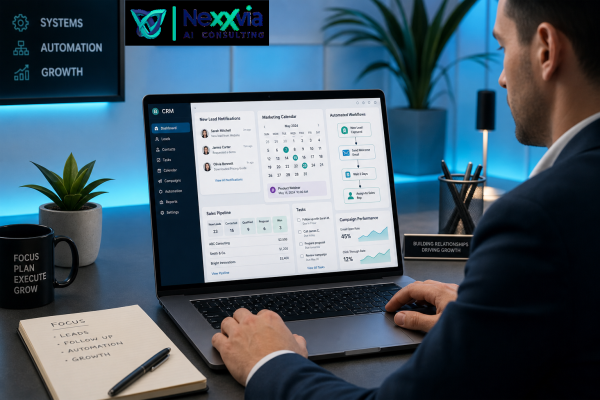
10 Small Business Pain Points AI Can Solve in 2026 | Nexxvia AI Consulting
Written By: Jackie Misiag, NexxVia Ai Consulting
Most small businesses are already using AI. The real advantage comes from implementing AI the right way.
In 2026, small business pain points are piling up fast, such as losing time to manual work and missed opportunities. Nexxvia AI Consulting implements practical AI and automations for small businesses that save time, improve follow-up, close revenue gaps, and reduce manual work.
Introduction:
If running a small business feels heavier than it used to, that is because it is. Teams are lean, customers now expect fast responses, and too much time still disappears into admin, follow-up, and disconnected systems. In 2026, the businesses pulling ahead are not the ones talking about AI the most. They are the ones putting it to work in the right places.
Here is the short version: AI can help small businesses:
save time
respond faster
follow up more consistently
cut down on repetitive work
The companies getting the best results are not using AI for everything. They are using it to fix specific bottlenecks in marketing, sales, customer service, scheduling, and operations.
That is where Nexxvia AI Consulting stands apart. Nexxvia takes the time to understand your businesses and your specific pain points, to design and implement the right AI systems, workflow automations, CRM processes, lead follow-up engines, customer communication flows, and reporting structures that move your business faster and cleaner. We don't just give advice, we execute and train you on the systems.
In this post we’ll break down the 10 biggest small business pain points AI can solve in 2026 and how Nexxvia AI Consulting turns those problems into practical automations.
Why Implementing AI Now Matters for Small Businesses
Goldman Sachs reported in March 2026 that 76% of small businesses are already using AI, and 93% of those users say it has had a positive impact on their business, yet only 14% have fully integrated AI into core operations.¹ That gap is the opportunity. Most businesses have access to tools. Far fewer have systems that are actually connected, deployed well, and driving measurable results.
The SBE Council (Small Business & Entrepreneurship Council) found that 82% of small business employers have invested in AI tools,² and the most common use cases are marketing and content creation, customer service and communications, sales support and lead generation, administrative automation, and financial management. IDC (International Data Corporation) adds that SMBs in 2026 are shifting from experimentation to pragmatic adoption, with measurable ROI becoming the standard.³
Pain Point #1: Marketing
Marketing takes too much time and still feels inconsistent.
Most small businesses do not struggle because they lack ideas. They struggle because there is never enough time to turn those ideas into blogs, emails, social posts, landing pages, and follow-up campaigns. Marketing gets pushed to the side, rushed at the last minute, or scattered across too many tools.
The SBE Council has identified marketing and content creation as the most common AI use case for small businesses in 2026.²
AI can:
speed up first drafts
repurpose content across channels
organize campaign production
support more consistent publishing without increasing payroll
How can businesses reduce marketing workload with automation?
Nexxvia AI Consulting turns marketing and content creation into a consistent system. Instead of random bursts of content, Nexxvia builds repeatable marketing workflows, AI-assisted content production, CRM-connected follow-up, and campaign automations that keep visibility and lead generation moving. That is how content starts producing business results instead of becoming another unfinished task.
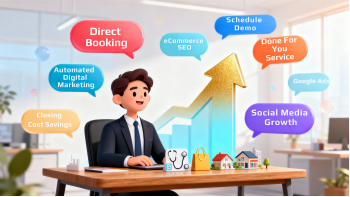
Pain Point #2: Lead Management
Leads are coming in, but revenue is still leaking.
A surprising number of businesses do not have a lead generation issue. They have a lead management issue. Prospects fill out forms, send messages, ask questions, or request quotes, and then the follow-up is slow, inconsistent, or missing entirely.
The SBE Council lists sales support and lead generation among the top AI use cases for small businesses.²
AI-powered CRM workflows can:
capture leads
send immediate replies
assign follow-up
trigger nurture sequences
keep pipelines active
All without relying on memory or manual task chasing, and while still keeping the personalization and human touch.
How can businesses improve lead follow-up and stop losing sales?
Automating lead workflows is one of the highest-value moves a small business can make. Nexxvia implements the infrastructure that turns inquiries into tracked opportunities, follow-up into a process, and pipeline management into something the owner can actually trust. More often than not, revenue grows not because the company spent more on ads, but because fewer leads were lost.
If you currently do not have a full CRM that can handle these type of workflows, Nexxvia can get you started with a modern CRM. Nexxvia is currently offering one month free. Our CRM partner provides 1:1 onboarding, on-demand training, Live Tech Chat that actually fixes things, and weekly support calls for you and your team! Schedule a quick call today to learn more!
Pain Point #3: Customer Service
Customer Service is swallowing the day with customers wanting answers now.
Customers want to know if you serve their area, how pricing works, what happens next, and how to book. When every one of those questions requires a manual response, the business burns time all day long.
Customer service and communications are now among the top small business AI use cases. AI assistants, chat workflows, and response automations can handle common questions, route inquiries, support after-hours engagement, and create a better customer experience without making the brand sound cold or scripted. However, AI assistants and chats should not be used for all customer communications.
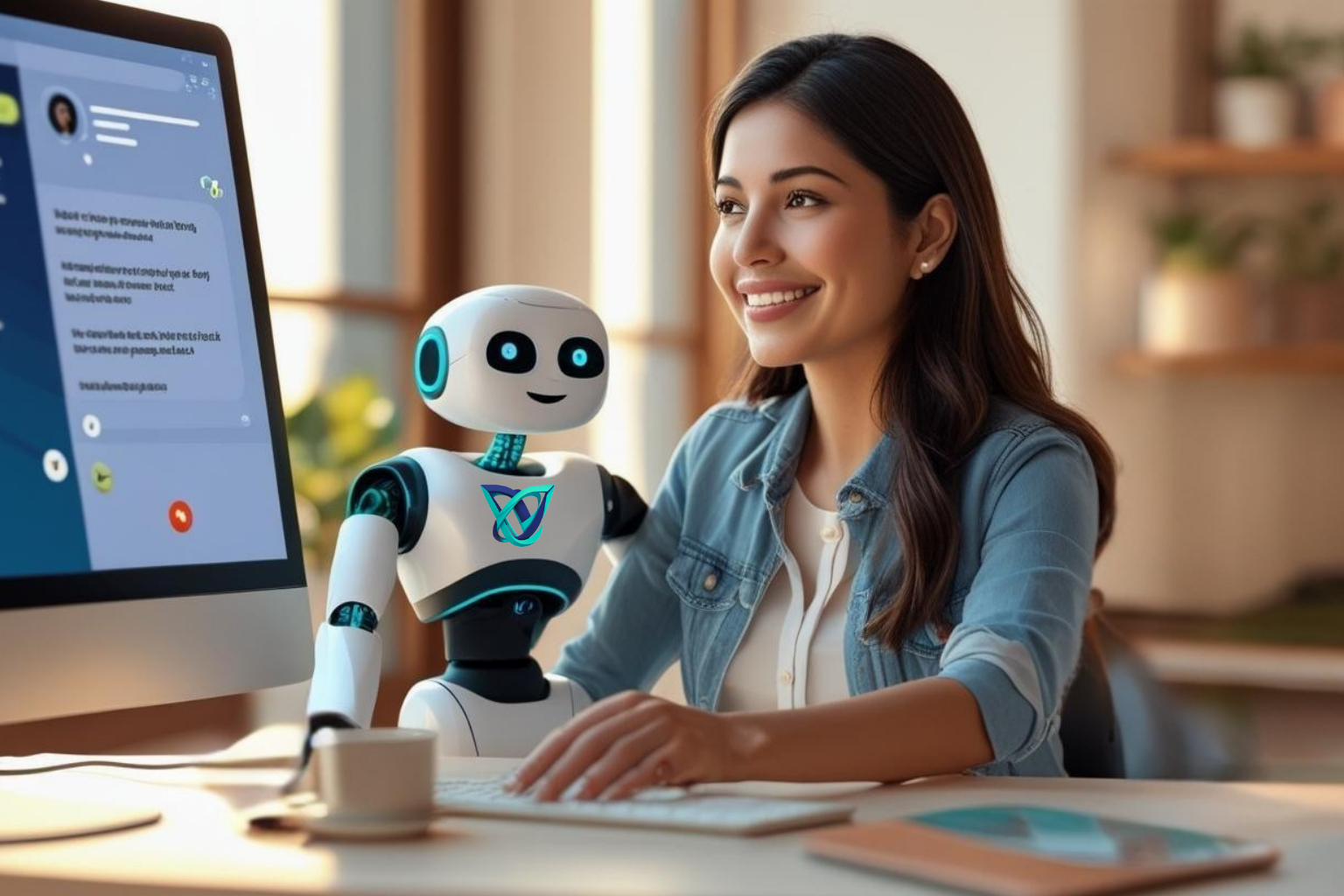
How can businesses speed up customer service with automation?
First, Nexxvia provides strategic leadership alignment to determine human and AI guardrails for your business. Then, we build these automations to feel natural, not robotic. The point is not to replace real conversations. The point is to stop wasting real human time on repeat questions that automation should already be handling.
Pain Point #4: Manual Admin
Manual admin work is draining profit.
There is a quiet admin cost inside most small businesses:
copying data
chasing paperwork
updating spreadsheets
sending reminders
moving information between systems
repeating the same internal tasks over and over
None of it feels dramatic in the moment, but together it slows the business down and eats away at margin.
Today's top uses of AI in small businesses includes administrative automation such as scheduling, data entry, and workflow management. These are exactly the kinds of tasks that automation can remove, streamline, or trigger automatically in the background.
How can businesses reduce manual admin work?
Nexxvia AI Consulting works with business leadership to identifying these bottlenecks specific to their business. Then, Nexxvia provides and implements the solution by mapping the workflow, building the automation, connecting the systems, and puts the process into motion. That is what turns AI from an idea into actual time savings and lower operating friction.

Pain Point #5: Scheduling
Scheduling chaos keeps creating friction.
Appointments, reminders, confirmations, reschedules, missed calls, and no-shows create more operational drag than most owners realize. When scheduling still depends on too much back-and-forth, the business loses time on both ends.
Scheduling automation is already part of the growing small business AI stack. With the right workflows in place, businesses can automate confirmations, reduce missed appointments, route inbound requests faster, and keep calendars moving without constant manual oversight.
How can businesses automate scheduling and appointment booking?
Nexxvia implements scheduling tools, booking workflows, automated reminders, and follow-up sequences so service-based businesses can reduce friction at every step, from first inquiry to booked appointment to post-service follow-up. Better scheduling does not just save time. It improves the customer experience, protects revenue, and keeps your network flow running smoothly.
Nexxvia AI has implemented Network Flow for hundreds of small businesses, pairing a proven strategy with customized workflows and content tailored to each business, industry, and ideal client. The system helps reduce no-shows with automated reminders and follow-up, while lead scoring ensures you are targeting the right prospects for your product or service.
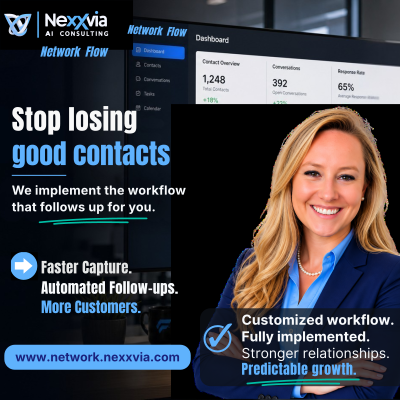
"Nexxvia's Network Flow has helped my team stop losing warm leads after networking events. We were wasting time and money on networking events and never following through with leads before Nexxvia implemented and trained us on this workflow! By moving contacts into our CRM quickly and automating follow-up, our business is now getting faster responses and fewer missed opportunities!"
- John D., CEO & Founder, Professional Services Industry
Learn more about how Nexxvia can build a custom Network Flow system or other workflows for your business.
Pain Point #6: Business Data
Business data is scattered and decision-making feels slow.
Most owners know their client and business information exists somewhere. It is just buried across email, spreadsheets, forms, CRM records, payment systems, and marketing platforms. When data lives in silos, decision-making turns into guesswork and reporting becomes a chore.
IDC says SMBs in 2026 are prioritizing practical digital strategies with clearer ROI.³ That only happens when the business can actually see:
what is working
where leads are coming from
cost per lead
what follow-up is being missed
what stage clients are in during the sales or service process
which processes are creating a bottleneck
What are the best ways to improve data visibility and reporting across multiple platforms?
This is one of Nexxvia's expertise. Nexxvia builds the connective layer by building custom dashboards, cleaner data flow and integration, automated reporting, and stronger visibility across your business. That gives owners a real operating picture instead of piecing together answers from six different platforms.
Pain Point #7: Financing
Financial admin keeps pulling attention away from growth.
Invoices, reminders, recurring reporting, and cash flow visibility rarely get the spotlight, but they shape the health of the business every day. When those tasks stay manual, they create friction, delay collections, and force owners to spend time on work that should already be systemized.
Financial management and forecasting are key areas of small business AI use. AI and automation can support payment reminders, recurring workflows, internal visibility, and smoother financial operations.
How can businesses automate billing and back-office workflows?
Nexxvia has built out and fully implemented service workflows, billing workflows, and other back-office automations that reduce manual status checks, streamline operations, and give owners more control over the business. This means less time chasing updates or payments, and more time making decisions that move the business forward. That is where automation becomes more than convenience, it becomes operational control.

Pain Point #8: Hiring & Onboarding
Hiring and onboarding are taking too much effort.
Every business wants to scale, but growth creates hiring pressure, and the hiring process itself can be messy and time consuming. Applications pile up, communication gets delayed, onboarding steps get missed, and internal handoffs break down.
AI can organize parts of that process, especially communication, screening, and task flow. Small businesses do not always need a giant HR platform. Many need clean automations that route applicants, trigger follow-up, and standardize onboarding steps.
How can businesses streamline hiring and onboarding?
Nexxvia implements hiring and onboarding workflows and builds out client or employee portals, so hiring feels less reactive and more controlled. That keeps the process moving without forcing the owner or office manager to carry every detail manually.
Pain Point #9: Operations
Operations still depend too much on memory.
A business may be growing, but if follow-up depends on memory, tasks live in someone's head, and internal processes change from day to day, growth starts creating stress instead of momentum. Too many small businesses are running on effort rather than systems.
SMB research 2026 shows that driving profitable growth is the number one business issue. GenAI and agentic automation are now the number one technology priority. At the same time, businesses are struggling with implementation complexity, data trust, and integrating AI into a cohesive operating model.
How can businesses improve operations with workflow automation?
This is exactly where Nexxvia creates leverage. Nexxvia replaces repeatable friction with repeatable systems, so the business runs on process, visibility, and automation instead of improvisation. That is what makes growth sustainable. Nexxvia takes the time to assess your current businesses' processes and bottlenecks before creating a tailored strategy for your business. Nexxvia also implements and builds out all workflows for your business and provides training for your team.
Pain Point #10: AI Chaos
Many businesses are using AI, but very few are deploying it well.
This is the issue underneath all the others. Buying a tool is easy. Building a workflow that drives outcomes is harder. That is why so many companies have access to AI but still feel buried in manual work.
Goldman Sachs found that small business AI usage is widespread, but full integration into core operations remains low.¹ IDC describes the current phase as pragmatic adoption,³ meaning the market is moving beyond experimentation and toward solutions that are easy to deploy and tied to ROI.
How can businesses turn AI tools into real business results?
Nexxvia closes that gap with execution. The company does not just talk strategy. Nexxvia designs the workflow, implements the automation, connects the systems, and puts AI to work in daily operations. That makes the business faster, more responsive, and far less dependent on manual effort.
Why Businesses Hire Nexxvia AI Consulting
Many businesses are using AI, but very few are deploying it well.
Most small business owners do not need another list of AI tools. They need someone who can look at the bottlenecks, identify the highest-value opportunities, and implement systems that produce immediate operational lift.
That is why businesses hire Nexxvia AI Consulting. Nexxvia implements practical AI and automation systems for marketing, lead follow-up, CRM workflows, customer communication, reporting, scheduling, and operations. The work is hands-on, action-oriented, and designed to create speed, clarity, and measurable results without unnecessary complexity.
👉 Schedule a call with Nexxvia AI Consulting
Just as important, the implementation model stays accessible. In a market where budget discipline matters, Nexxvia delivers surprisingly cost-effective execution compared with the ongoing cost of manual labor, missed follow-up, delayed response times, and fragmented operations.
Sources:
Goldman Sachs, "Survey: Small Businesses Embrace AI — But Need Training and Support to Fully Harness It,” March 17, 2026, https://www.goldmansachs.com/pressroom/press-releases/2026/small-businesses-embrace-ai-but-need-training-and-support-to-fully-harness-it.
Small Business & Entrepreneurship Council. “Success Strategies: The AI Tools Small Businesses Are Using.” April 25, 2026. https://sbecouncil.org/2026/04/25/the-ai-tools-small-businesses-are-using/
IDC, “The SMB 2026 Digital Landscape: How AI Is Redefining Growth,” January 8, 2026, https://www.idc.com/resource-center/blog/the-smb-2026-digital-landscape-how-ai-is-redefining-growth/.
McMillan, Rose. "Small business AI adoption statistics for 2026," Capsule, April 23, 2026, https://capsulecrm.com/blog/small-business-ai-adoption-statistics/.
Disclosures:
This article is intended to provide you with general information regarding AI and content. The contents of this article are not intended to provide specific legal or financial advice. If you have any questions about the contents of this document or if you need legal or financial advice as to an issue, please contact a licensed attorney or CPA in your state. This communication may be considered advertising in some jurisdictions. The information in this article is accurate as of the publication date. Because the law in this area is changing rapidly, and insights are not automatically updated, continued accuracy cannot be guaranteed.


